

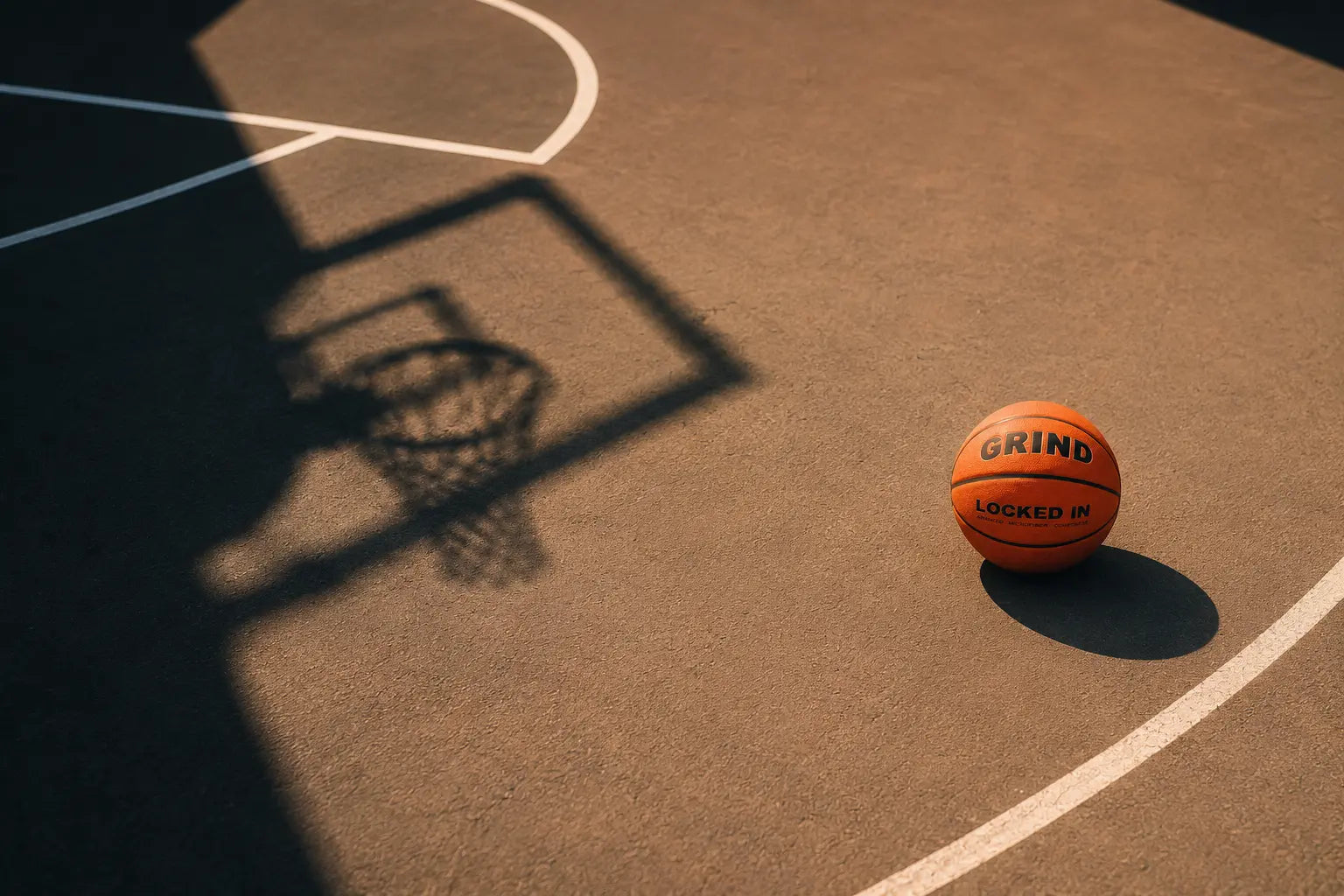
Most players buying a basketball rebound machine are choosing between spending $100 on a net that rolls the ball back from one angle and spending $1,995 on a machine that catches every shot and passes it back to 9 spots at 1,000 reps per hour.
The price gap is real. So is the training gap.
A manual net stops the ball from rolling into the street. An automatic machine removes the need for a rebounder entirely and keeps a solo session in rhythm from the first shot to the last.
Whether that difference justifies the investment depends on how seriously and how often the player trains.
Looking for Automatic Rebounding and Real Shooting Rhythm? Explore the GRIND Machine →
What Is a Basketball Rebound Machine?
A basketball rebound machine is a training system that catches or redirects the ball after a shot and returns it to the shooter. Some products are simple manual systems that roll the ball back down a ramp. Others are automatic machines that catch makes and misses and pass the ball back to a programmed spot.
Manual Rebound Machines
Manual systems use a net, ramp, or chute to redirect the ball. The return is passive. Gravity does the work. Shoot from a different spot than the ramp is angled for and the ball comes back somewhere you are not. Miss the shot and you are still chasing it.
Automatic Rebound Machines
Automatic machines use a net to collect made and missed shots and return the ball without the player having to reset. Grind's own educational content describes a shooting machine as a rebounding net, return mechanism, and programmable pass system working together. So what separates an automatic machine from a basic net return is that the ball comes back to where you are standing, ready to catch and shoot again.
Basketball Rebound Machine vs Manual Rebound Net: Quick Comparison
|
Feature |
Manual rebound net |
Automatic basketball rebound machine |
|
Main function |
Catches or rolls the ball back |
Catches and passes the ball back automatically |
|
Best for |
Casual shooting, budget practice |
Serious solo shooting workouts |
|
Handles misses |
Sometimes |
Yes |
|
Return rhythm |
Slower and less consistent |
Faster and repeatable |
|
Training spots |
Usually limited to one direction |
Multiple spots on advanced machines |
|
Shot volume |
Moderate |
High |
|
Price |
Lower |
Higher |
|
Best buyer |
Beginner or casual player |
Competitive player, serious home user, trainer |
Simply put, a manual net solves a convenience problem. An automatic rebound machine solves a training problem.
Is an Automatic Basketball Rebound Machine Worth It for Home?
An automatic basketball rebound machine is worth it for home if the player trains several times per week and wants serious shot volume without needing a rebounder. Coach Lovett, who runs The Gun in his program, claims his players will get 250 shots up in 20 minutes when a machine is available. Without one, the same players find reasons not to shoot after practice.
It Is Worth It If...
-
The player trains alone several times per week and wants hundreds of shots per session.
-
They are preparing for tryouts, a school season, or AAU.
-
Parents have been rebounding every workout and want that to stop.
-
The player needs reps from multiple spots around the arc, not just free throws from one fixed angle.
-
They have already outgrown a basic return net and are losing rhythm chasing long misses.
It May Not Be Worth It If...
-
The player is a casual beginner who shoots occasionally.
-
Budget is under $500 and they only need help keeping the ball near the hoop.
-
They do not have enough space to use an automatic machine properly, or they only need free throw returns.
Why GRIND Is Built for the Home Investment Case
The GRIND Machine is built specifically for home players who want serious training without a facility budget. It costs $1,995 on sale, $2,495 regular. It catches makes and misses with a 12-foot net, passes to 9 spots, runs two basketballs simultaneously to reach 1,000 reps per hour, weighs 110 lbs, folds to 38" x 13" x 18", and sets up in 90 seconds. The one-year warranty is included, with optional extended coverage up to eight years.
The player in the Kobe Mamba Mentality challenge described his first session with a shooting machine as the most shots he had ever put up at one time. He was more tired than expected because moving between spots at game speed without stopping to retrieve the ball is harder cardio than walking after your own rebounds. That tiredness is the point. It means the session was a workout.
Payment plans through Affirm start at $97 per month at 0% APR, which changes the upfront barrier for a player or family planning to use it consistently.
If You Have Outgrown a Manual Rebound Net, GRIND Gives You Automatic Return and Serious Home Shot Volume →
Which Basketball Rebound Machine Is Best for Under $1,000?
A true automatic basketball rebound machine under $1,000 is difficult to find. Under that price point, buyers are looking at manual systems, return nets, or shot trainers rather than motorized passing machines.
The Dr. Dish IC3 at $499.99 is the strongest option in this range. It handles both makes and misses using a manual 180-degree return ramp, weighs 35 lbs, and works on pole and wall-mount hoops. It carries 15 reviews at 4.9 stars on Walmart.
What it does not do is pass the ball. The ball rolls back to you rather than being delivered to a programmed spot, which means the catch-and-shoot rhythm is different from what a motorized machine provides.
What You Can Expect Under $1,000
Manual ball return. Net or ramp system. Better convenience than chasing every shot. No motorized passing. Limited to one return angle in most cases. Lower shot volume than an automatic machine.
Useful for beginners, casual driveway practice, and families testing whether a player will train consistently before committing to more.
When to Move Above $1,000
Move above $1,000 when the player practices consistently, shot volume matters, return rhythm matters, and they need a product that can grow with them rather than one they outgrow in six months.
Buying a $100 net and then a $500 trainer and then a $2,000 machine is more expensive than starting at the right tier for the player's actual training level.
What Is the Difference Between a Rebound Machine and a Shooting Machine?
A rebound machine focuses on collecting and returning the ball. A shooting machine usually does that plus supports structured shooting workouts, timed returns, multiple passing locations, and higher-volume repetition. Many automatic rebound machines are also shooting machines because they rebound, collect, and pass the ball back.
|
Term |
What it usually means |
Example use |
|
Rebound net |
Manual net that catches or redirects balls |
Casual driveway shooting |
|
Rebound machine |
System that collects and returns balls |
Solo practice with less chasing |
|
Shooting machine |
Automatic system for repeated shooting reps |
High-volume structured training |
|
GRIND Machine |
Portable shooting machine with automatic rebounding and return |
Serious home training |
GRIND is both an automatic rebound machine and a portable basketball shooting machine. It rebounds makes and misses and returns the ball for repeated shooting reps.
For a full breakdown of how shooting machines work mechanically across brands and price points, the what is a basketball shooting machine guide covers the rebounding system, pass mechanism, and setup process in detail.
Manual Rebound Net Pros and Cons
|
Pros |
Cons |
|
Lower upfront cost |
Slower, passive return |
|
Simple concept |
Does not catch every miss |
|
Useful for beginners |
Hard backboard misses often kick out |
|
No motorized parts |
Return angle changes based on where the ball hits the net |
|
Good for casual home practice |
No consistent passing rhythm |
|
Reduces some ball chasing on makes and soft misses |
Lower shot volume |
|
Easy to understand and set up |
Can become frustrating for serious training |
|
Low-maintenance compared with machines |
Does not grow well with the player’s development |
Best For
Younger players, casual driveway shooters, families on a strict budget, free throw practice, and players who are not yet training with enough frequency to justify an automatic machine.
Automatic Basketball Rebound Machine Pros and Cons
|
Pros |
Cons |
|
Higher shot volume per session |
Higher upfront price |
|
Better solo training rhythm |
Requires storage planning |
|
Catches makes and misses |
May need power access for motorized machines |
|
Returns the ball automatically to a programmed spot |
More components than a basic net |
|
Better for catch-and-shoot practice |
Not necessary for every beginner |
|
Can replace the need for a rebounder or passer |
Takes more setup than a simple return net |
|
Better fit for competitive players preparing for real seasons |
Usually needs more space around the hoop |
|
Supports more structured workouts over time |
More machine to maintain, move, and protect |
Best For
Competitive youth players, high school athletes preparing for tryouts or a season, AAU players, serious solo shooters training multiple times per week, trainers running individual skill development sessions, and families investing in long-term development rather than a product they will replace in a year.
Stop Chasing Rebounds and Start Training With Rhythm. Explore GRIND →
How to Decide Which Option Is Worth the Investment
Choose a Manual Rebound Net If...
Budget is under $1,000, the player is new to basketball or trains casually, and the primary goal is stopping the ball from rolling across the driveway. A Spalding Back Atcha at $20.99 or a Goalrilla return system at $109.95 handles that job without overcomplicating the purchase.
Choose an Automatic Rebound Machine If...
The player trains multiple times per week, shot volume matters, and they need repeatable passes to build catch-and-shoot rhythm. They are preparing for a competitive season, practising from multiple spots around the arc, and want a machine that can support their training for years rather than months.
For a full comparison of what each machine in this category delivers, the basketball shooting machine comparison guide breaks down GRIND, Dr. Dish, and The Gun across price, features, and use case.
Choose GRIND If...
You want automatic rebounding and return, a home-friendly machine below many pro-grade systems, up to 1,000 reps per hour, 9 spot passing, a portable design that sets up in 90 seconds, and a product built specifically for the player who does not have a facility but trains seriously enough to need one.
For questions about whether the machine fits your specific home setup, the GRIND FAQ and support page cover compatibility, power requirements, and space needs in detail.
Ready to Move From Manual Return to Automatic Reps? Explore the GRIND Machine →
FAQ
What is a basketball rebound machine?
A basketball rebound machine is a training system that catches, collects, or returns the ball after a shot. Manual versions use nets or ramps to roll the ball back. Automatic versions catch makes and misses and pass the ball back to a programmed spot without another person.
Is an automatic basketball rebound machine worth it for home?
An automatic basketball rebound machine is worth it for home if the player trains several times per week and wants high-volume solo reps with consistent return rhythm. It is less necessary for casual beginners who only need to stop the ball from rolling away.
How does a basketball rebound machine compare to a manual rebound net?
A manual rebound net reduces ball chasing but returns the ball slowly from a fixed angle. A basketball rebound machine catches makes and misses and returns the ball automatically, which creates the consistent catch-and-shoot rhythm that structured solo training requires.
Which basketball rebound machine is best for under $1,000?
Under $1,000, the best option is the Dr. Dish IC3 at $499.99, which handles both makes and misses with a manual 180-degree ramp. It is not a motorized machine, but it is the strongest manual trainer in this price range. True automatic rebound machines with motorized passing start above $1,000.
What is the difference between a rebound machine and a shooting machine?
A rebound machine collects and returns the ball. A shooting machine adds motorized passing to programmed spots, structured return timing, and higher-volume repetition. Many automatic rebound machines are also shooting machines because they do both.
Is GRIND a rebound machine or a shooting machine?
The GRIND Machine is both an automatic basketball rebound machine and a portable basketball shooting machine. It catches makes and misses automatically, passes the ball back to 9 spots, and supports up to 1,000 reps per hour at home.
Is a manual rebound net enough for serious players?
A manual rebound net can help beginners and casual players, but serious players outgrow it quickly because it does not provide the return consistency, shot volume, or catch-and-shoot rhythm that structured training requires.
Share:
Basketball Returner Buying Guide: $20 Chutes to $2,000 Machines Compared
How to Shoot a Basketball: The Complete Step-by-Step Guide to Perfect Form