

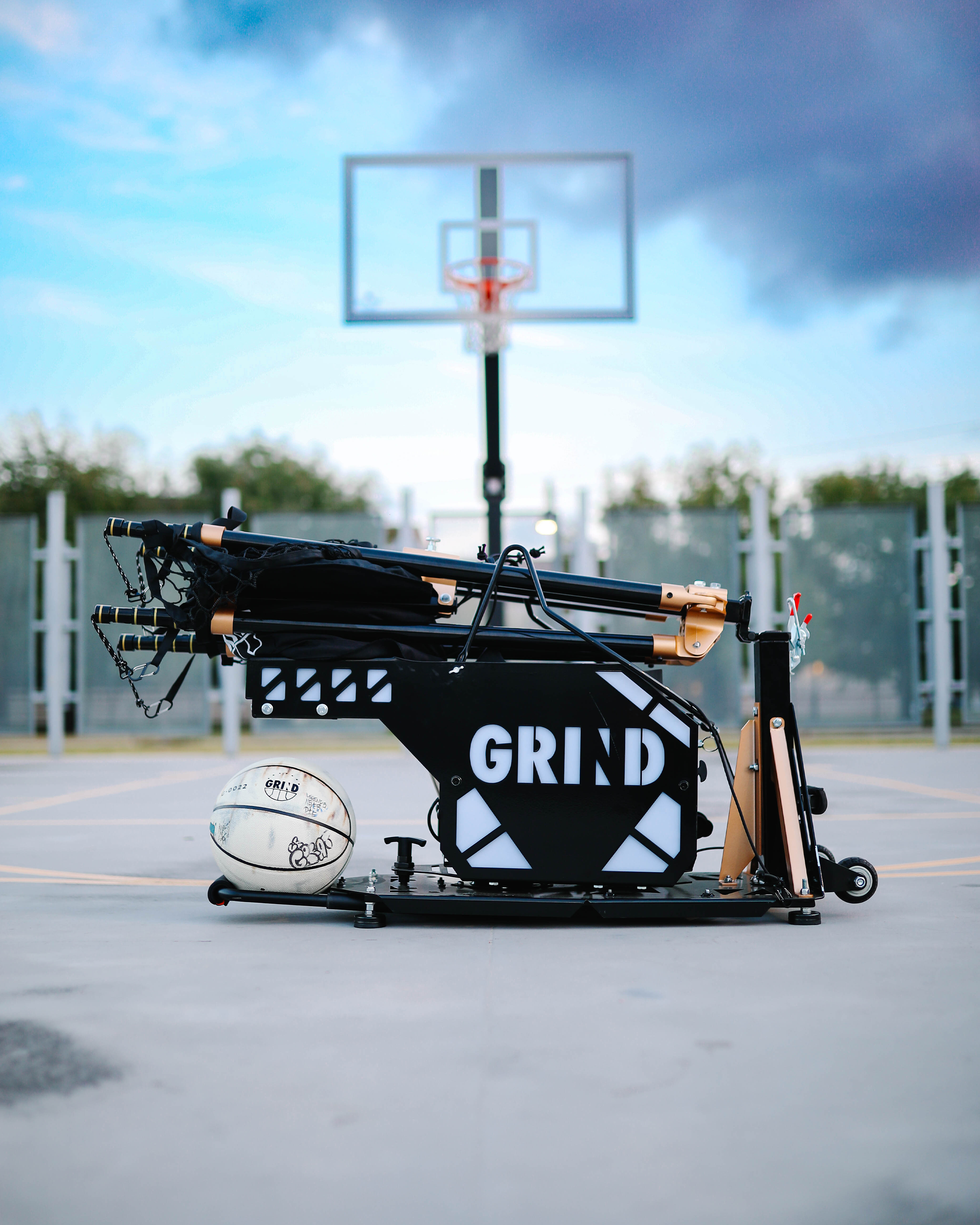
Basketball shooting machine prices vary a lot, from a basic rebounder to a full machine built for home training, school programs, or facilities. The bigger difference is what that money actually gets you, whether that’s easier reps, faster setup, better portability, or a larger machine built for heavier daily use. The right budget comes down to where the machine will live, how often it’ll get used, and whether you need something simple that gets shots up fast or something built for a more permanent setup.
Want to skip the research? Explore the GRIND Machine or compare all shooting machines.
How Much Does a Basketball Shooting Machine Cost?
Basketball shooting machines typically fall into three clear price tiers, and each tier reflects a meaningful jump in capability, not just brand markup.
Entry level ($500 to $3,000): Covers basic rebounders and simple return systems. Limited automation, minimal programming, and built for occasional solo training.
Mid-range ($3,000 to $6,000): Includes real automated rebounding, consistent ball return, and enough shot volume for serious individual training and smaller programs.
Premium ($6,000 to $12,000 and up): Team-grade machines with advanced programming, analytics, high shot capacity, and facility-level build quality.
For a quick budget filter, home users usually land in the $3K to $5K range, teams typically plan around $5K to $9K, and facilities generally budget $8K and up once accessories and install costs are factored in.
What Is a Reasonable Price for a Shooting Machine?
A reasonable price depends on who's using the machine and how hard it's going to get used. The general rule is that more features raise the cost, so matching features to actual training needs is what keeps the buy efficient.
Beginner training: $2,500 to $4,000 is reasonable for a machine that builds consistent repetition without a heavy feature stack.
Serious players: $4,000 to $7,000 gets you meaningful automation, strong ball return, and enough drill flexibility to support daily training.
Team or facility use: $7,000 to $10,000 and up for programs that need high shot volume, programmable drills, and analytics built into the workout.
The trap to avoid is paying for features that never get used. A stripped-down machine that gets touched every day is a better investment than a premium machine that sits idle because it's too complex to set up.
What Is the Cheapest Shooting Machine Available?
The cheapest options in the shooting machine category are simple rebounders that return the ball without automated passing. They run from roughly $500 to $1,500 and cover the basics: a net catches the shot and bounces it back toward the shooter. True entry-level shooting machines with actual passing and return systems start around $2,500 and up. Below that price point, automation is limited, and the machine won't deliver the rep volume most serious training requires.
What Features Affect the Price?
Five features do most of the work when a shooting machine's price moves from the entry tier toward premium. They stack: a machine with all five runs $8,000 and up, while a machine with one or two can deliver real training value under $4,000.
Rebounding System
Automatic rebounding and return is what separates a real shooting machine from a basic net, and it's the element that actually keeps a shooter in rhythm during high-volume work. It adds cost, and almost every machine worth buying has some version of it.
Shot Output
Higher reps per hour cost more because the build has to keep up. A machine that delivers 1,500 to 1,800 shots per hour is engineered for team-sized training with the frame strength and ball capacity to match, while a home-focused machine at around 1,000 shots per hour doesn't need that ceiling and comes in at a lower price.
Analytics and Tracking
Shot tracking, app integration, and data dashboards raise the price meaningfully. For programs that will actively use the data, the cost is easy to justify, but for players who mostly want reps, analytics become a cost with little return.
Build Quality
Commercial-grade machines built for daily facility use cost more than home-focused units because the frame, motor, and return components are engineered for a heavier-duty cycle.
Portability
Lightweight, portable machines are often cheaper and simpler than large facility units, though that's a function of different engineering priorities rather than cut features. A portable machine that actually fits the buyer's space usually delivers more use than a larger machine that takes over a room.
Budget vs Premium Shooting Machines
The trade-off between budget and premium machines usually isn't about quality; it's about fit. A $3,000 machine that matches the buyer's actual training routine beats an $8,000 machine that sits unused because it's too big, too complex, or too tied to a location the player rarely visits.
Budget machines: basic functionality, fewer features, smaller build. Work well for occasional solo training and for players who mostly need repetition without a full training platform.
Premium machines: programmable drills, analytics, higher shot volume, and team-grade capacity. Built for programs that use all of that depth on a regular basis.
Most buyers don't actually need premium, and the right question isn't "which tier is best," it's "which tier matches how this machine is actually going to be used day to day."
Shooting Machine Price Comparison
Shooting machines cluster into three clear price tiers, and the jumps between them reflect real capability differences, not just brand positioning.
Entry level: $2,500 to $4,000.
Mid-range: $4,000 to $7,000.
High-end: $7,000 to $12,000 and up.
Within each tier, the real spread comes from brand, feature depth, and ongoing ownership costs like subscriptions and maintenance, which is why two machines with similar sticker prices can have very different total costs.
Compare shooting machine pricing to find the best fit for your budget.
Are Financing or Leasing Options Available?
Yes, and they're more common than most first-time buyers expect. Monthly financing plans through third-party providers are available for most major shooting machine brands, and leasing is standard for schools and clubs that prefer a predictable monthly line item over a single capital purchase. Typical monthly payments land between $100 and $250, depending on the model, the term, and the down payment. That structure often makes a better machine affordable without stretching the upfront budget.
Is a Shooting Machine Worth the Investment?
For a player or program that trains consistently, a shooting machine usually pays back the investment in under a year. The value comes from three places: the rep volume it unlocks, the ability to train solo without a passer, and the consistent ball return that keeps shooters in rhythm instead of chasing.
Private trainer: $50 to $100 per session, often 30 to 60 minutes of actual shooting time.
Shooting machine: a one-time purchase that supports daily training for years.
For a player doing three sessions a week with a trainer, the annual cost is roughly $7,800 to $15,600. In contrast, a mid-range shooting machine pays for itself inside the first year in that scenario, and the machine keeps running after the math breaks even.
Used and Refurbished Shooting Machines
Used and refurbished machines lower the upfront cost, which makes them attractive for budget-conscious buyers, and most are sold through resellers, with some including a limited warranty. The trade-offs are real, though, because conditions vary, parts availability can be limited, and the savings sometimes disappear once a repair comes up. If you go this route, vet the seller carefully, confirm what warranty actually transfers, and factor in the possibility of service costs down the line.
Cost of Ownership Beyond Purchase
The sticker price typically represents only 70 to 85 percent of what buyers actually spend on a shooting machine across a five-year window. Four ongoing cost categories account for the rest, and they're worth pricing in before the purchase, not after.
Maintenance: Belts, motors, nets, and moving parts wear over time and occasionally need service.
Repairs: Past the warranty window, parts and labor come out of pocket unless you've paid for extended coverage.
Software subscriptions: Machines with app integration often require a monthly subscription for full analytics, typically around $30 to $40 per month.
Accessories: Ball carts, replacement nets, protective covers, and drill upgrades add a few hundred to a few thousand dollars over the life of the machine.
Across a five-year window, ownership costs can add 15 to 30 percent on top of the original purchase, depending on the brand and model.
Which Brand Offers the Best Value?
Value is less about which brand is cheapest and more about which one matches the buyer's actual training setup. GRIND, Dr Dish, and The Gun each dominate a different slice of the market, and picking the wrong one for your context is how buyers end up with a machine that's technically great but practically unused.
GRIND Basketball: lower upfront cost, lower shipping cost at $129, simple setup in under two minutes, portable at roughly 110 lbs, and around 1,000 shots per hour. No required subscription. Best value for home users, youth and high school players, and coaches or trainers who need a machine that moves with them.
Dr Dish: higher unit cost, higher shipping cost at $499, advanced analytics, and strong programming depth. Best value for programs that will genuinely use the data and app features.
The Gun: premium pricing, built for teams, with high shot output and deep drill programming. Best value for dedicated facilities and team-level training environments.
The cheapest option on paper isn't always the best value, and neither is the most expensive. Value tracks with use, which is why matching the machine to the training reality matters more than chasing a feature list.
Compare the GRIND Machine against Dr Dish and The Gun, or view the full GRIND lineup.
How to Choose the Right Shooting Machine
Five decision factors usually settle the choice, and they tend to compound. Budget and usage frequency drive the tier, while training level, portability, and user count determine which specific machine inside that tier earns the spot.
Budget: What's the real ceiling, including ongoing costs, not just the sticker?
Training level: Beginner, serious player, team, or facility.
Usage frequency: Daily training demands more machine time than occasional use.
Portability: Does the machine need to move between locations, or will it live in one place?
Number of users: A single-player home setup has different needs than a full team environment.
Run a draft pick through those five questions, and the right price tier usually surfaces on its own.
Why GRIND Basketball Is the Practical Pick on Basketball Shooting Machine Price
Basketball shooting machines can run anywhere from a basic rebounder price point to full facility money, but the real decision is not just what the machine costs. It’s what you get for that money, how easy the machine is to live with, and whether it actually fits the way you train. That’s where GRIND stands out. At $1,995, with a 110-pound portable build, 90-second setup and takedown, and up to 1,000 shots per hour, it gives home users, parents, coaches, and smaller programs a much more usable setup without pushing them into a bigger machine, a permanent install, or another monthly cost to think about.
If your goal is to get shots up consistently without overbuying, GRIND makes a lot of sense. You’re paying for reps, portability, and simplicity, not extra layers that only make sense in a more fixed, data-heavy setup. For a driveway, home gym, or training setup that has to stay flexible, that makes GRIND the practical pick on price and one of the easier machines to justify over time.
Explore the GRIND Machine · Compare all shooting machines · Review the FAQ
Frequently Asked Questions
How much does a basketball shooting machine cost?
Basketball shooting machine pricing covers a wide range because the category includes everything from rebounders and shot trainers to full shooting machines built for home, school, or facility use. GRIND currently lists its machine at $1,995, Dr. Dish Home starts at $2,995, and larger facility-style machines often move into quote-based pricing instead of a simple public checkout flow. Additionally, Dr Dish also charges $499 to ship the unit, while GRIND charges only $129.
What is the cheapest shooting machine?
Basic rebounders start around $500 to $1,500, and entry-level automated shooting machines begin around $2,500, while a true portable shooting machine like GRIND is a step above that and is built for buyers who want actual rep volume and automatic return without moving into full facility pricing.
Are financing options available?
Yes. Most major brands offer monthly financing through third-party providers, with typical payments in the $100 to $250 range. Leasing is also common for schools and facilities. Dr. Dish Home is publicly marketed with financing, and GRIND also offers payment-plan options on its product page. Leasing or quote-based purchase flows are more common once you move into school, facility, and larger machine setups.
Is a shooting machine worth it?
It usually is if the machine actually fits the way you train and gets used consistently. Bigger machines can make sense for schools and facilities, but for home users, parents, coaches, and smaller programs, GRIND has a strong value case because it is built around portability, fast setup, and simpler ownership instead of a bigger facility-style system.
What features affect price?
Price usually moves with the type of machine, the amount of automation, whether app-based training or analytics are built in, the scale of the machine, and whether it is meant for home or facility use. Dr. Dish Home pushes app control and tracked training harder, while GRIND’s value is tied more to portability, automatic return, and straightforward rep-building without a subscription layer.
Can I buy a used machine?
Yes. Used and refurbished machines are available across the category, though the model, condition, shipping, and warranty can vary a lot. Dr. Dish officially sells refurbished units, and Shoot-A-Way’s pricing also varies based on whether a machine is new or reconditioned, so it is worth checking exactly what is included before buying. GRIND also offers refurbished units with the option to purchase an extended warranty.
Share:
Dr Dish Pricing Explained: How Much Does a Shooting Machine Cost?
Best Basketball Shooting Machine: Complete Comparison Guide for 2026