

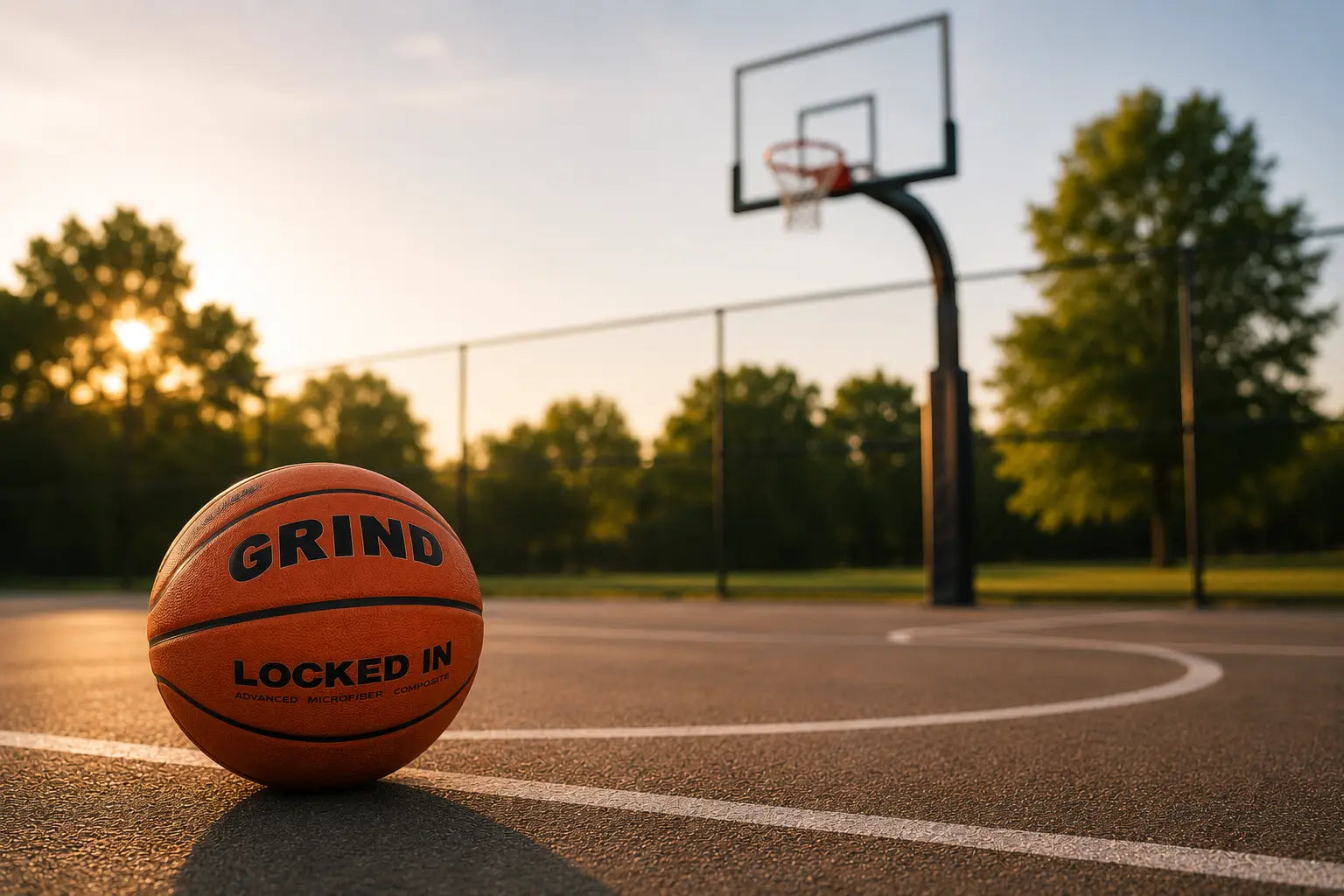
Solo basketball practice sounds simple until every missed shot turns into a walk across the driveway, garage, yard, or street. A $20.99 Spalding chute stops the ball rolling away. A $1,995 pneumatic shooting machine passes it back to nine spots at 1,000 reps per hour.
Calling both of them a basketball return system is how buyers end up with the wrong product.
Want a Home Setup That Does More Than Catch the Ball? Explore the GRIND Machine →
Quick Answer: Which Solo-Training Tool Should You Buy?
|
Training goal |
Best tool |
Why |
|
Cheapest way to reduce ball chasing |
Rim or chute return attachment |
Low cost, simple, usually returns made shots |
|
Casual driveway shooting |
Basketball return net |
Helps collect or redirect balls during home practice |
|
Rebounding drills |
Rim or dome rebounder |
Creates unpredictable rebounds for reaction training |
|
Better solo shooting structure |
Manual shot trainer |
More useful than a basic net, but still manual |
|
Serious solo training |
Shooting machine |
Catches makes and misses, returns the ball automatically |
|
Best GRIND fit |
GRIND Machine |
Built for high-volume home shooting with automatic return |
If the player only needs the ball to come back sometimes, a cheap return net may be enough. If they want to build shooting rhythm, take hundreds of shots, and train without a rebounder or parent around, a shooting machine is the better long-term fit.
What Is a Basketball Return Net?
A basketball return net is a training aid that attaches near the hoop, backboard, rim, or pole to catch or redirect the ball after a shot. Some return nets send the ball back toward the shooter. Others mainly stop the ball from rolling away.
The Walmart basketball return system category lists over 87 products in this space, ranging from a $20.99 Spalding Back Atcha chute to a $96.15 Hathaway Rebounder with a heavy-duty polyester net. They are all called return systems. They do not all do the same thing.
How a Return Net Works
The net sits below, behind, or around the hoop. Made shots and some misses fall into the net, which redirects the ball back toward the player using gravity, angle, or a ramp. Some systems are fixed. Others rotate or adjust direction.
Return quality depends on the angle the net is set at, the hoop type, and where the shot misses. A ball that clips the front of the rim and drops straight down returns cleanly. A ball that hits the side of the backboard and kicks left does not.
What a Return Net Does Well
For casual home practice and free throw repetition, a basic return net does a real job. It cuts the downtime between shots for a beginner or a young player who mostly misses forward.
The Spalding Back Atcha at $20.99 with 207 reviews at 4.0 stars is the best-selling product in the category on Walmart for a reason. At that price, it earns its place for families testing whether a player will practice consistently before committing to more.
What a Return Net Does Not Do
It does not catch every miss. A hard kick-out off the backboard, a long miss to the left, or a ball that barely clips the rim and bounces sideways go nowhere useful on most basic net systems.
It does not pass the ball back. It either rolls it or drops it, which is a different feel from a real catch. It does not create game-like shooting rhythm or support movement shooting from multiple spots.
Basketball Return Net vs Rebounder: What Is the Difference?
A basketball return net is one type of rebounder. The word rebounder gets used across every product in this category, from a $26.75 HOMEMAXS net to a $572.46 wall-mounted Gamvdout machine. That makes comparison shopping genuinely confusing.
|
Tool |
What it does |
Best for |
Limitation |
|
Basketball return net |
Catches or redirects the ball |
Casual home shooting |
Fixed return, limited miss coverage |
|
Chute returner |
Sends made shots back |
Free throws, beginners |
Often weak for missed shots |
|
Rim or dome rebounder |
Deflects the ball away from the rim |
Rebounding drills |
Does not return ball for shooting rhythm |
|
Manual shot trainer |
Nets and rolls ball back |
More structured solo reps |
Still not fully automated |
|
Shooting machine |
Catches and passes ball back |
Serious solo shooting |
Higher upfront cost |
If the buyer wants fewer walks across the driveway, a return net can work. If the buyer wants better shooting workouts, they should compare return nets against shooting machines, not just other nets.
For a full breakdown of how shooting machines compare at different price points, the basketball shooting machine comparison guide covers that in detail.
Basketball Return Net vs Shooting Machine: Which Is Better for Solo Practice?
This is the question the market obscures by putting a $26 net and a $1,995 machine in the same search results page under the same keyword.
Choose a Basketball Return Net If...
-
The player is a beginner or young. Budget is the top concern.
-
The goal is casual driveway shooting or free throw practice.
-
They mainly shoot from one spot and mostly make clean shots.
-
They do not need timed passes, multiple spots, or the ball delivered to a specific location.
Choose a Shooting Machine If...
-
The player trains several times per week and wants hundreds of shots per session.
-
They need consistent catch-and-shoot rhythm from different spots around the arc.
-
They are preparing for tryouts, AAU, school season, or serious competition.
-
Nobody is consistently available to rebound for them.
-
They want a home training setup that develops their game rather than just making casual practice slightly less frustrating.
Why GRIND Is the Serious Solo-Training Upgrade
The GRIND Machine is not a bigger version of a return net. It is a different tool. The 12-foot net catches made and missed shots. The pneumatic arm passes the ball back to one of 9 programmed spots at a set interval. Two basketballs load simultaneously, which keeps the rhythm continuous. At 1,000 reps per hour, a player gets up more shots in 30 minutes than most solo driveway sessions produce in two hours.
It weighs 110 lbs, folds to 38" x 13" x 18", and sets up in 90 seconds. That is the spec that matters for home buyers: a machine that comes out and goes away fast enough that a player uses it before school or after practice, not just on weekends when there is extra time.
If you want to understand exactly how the machine works mechanically before deciding, a basketball shooting machine guide covers the rebounding system, pass mechanism, and setup process in full.
What Is the Cheapest Way to Get Rebounds During Solo Basketball Training?
The cheapest way is a basic chute return attachment or simple basketball return net. The Spalding Back Atcha at $20.99 is the entry point. The SKLZ Kick-Out at $59.99 gives more angle flexibility. The Hathaway Rebounder at $96.15 adds a heavy-duty polyester net for a sturdier driveway setup.
Cheapest Option: Chute Return Attachment
A chute attachment hooks onto the rim and funnels made shots back toward the shooter. The Spalding Back Atcha at $20.99 and SEGMART 360° Basketball Return Chute at around $79.99 both work on this principle. Good for beginners, free throws, and casual made-shot returns. Long misses or side-kick shots go nowhere useful.
Budget Option: Driveway Return Net
The Goalrilla Basketball Hoop Return System at $109.95 and the Silverback Yard Guard at $219.95 are the mid-range driveway options. Wider catching area, more stable frame than a rim chute. The Goalrilla Yard Guard Defensive Net at $319.95 has the highest rating in this tier at 4.4 stars from 37 reviews on Walmart. Still limited on return consistency and miss coverage.
Best Long-Term Option: Shooting Machine
More expensive upfront, but for a player who trains regularly the difference in training quality is significant. A basic return net reduces ball chasing. A shooting machine eliminates it and replaces a human rebounder entirely. For players serious enough to use it five days a week, the GRIND Machine justifies the price difference quickly.
If a Return Net Feels Too Limited, Upgrade to GRIND and Train With Automatic Rebounding and Return →
Which Basketball Return Net Works With a Portable Hoop?
This is one of the most common buyer complaints in the Walmart return system category. Products that work on in-ground hoops often do not fit portable hoops cleanly because of differences in pole angle, base width, backboard shape, and height-adjustment mechanisms.
What to Check Before Buying
Check rim height, backboard width and depth, pole clearance above the base, whether the height adjustment mechanism is in the way, and whether the base is wide enough that a yard net can sit in front without tipping.
The Goalrilla system is marketed as compatible with most in-ground hoops specifically, which implies limitations on other hoop types. The Dr. Dish IC3 at $499.99 works on both pole and wall-mount hoops. The IE Sports Basketball Rebounder at $149.99 with 17 reviews at 4.9 stars on Walmart is a multi-sport rebounder that can attach to different setups, though confirming compatibility with your specific hoop before purchasing applies to every product in this category.
Why GRIND Avoids This Problem
The GRIND machine does not attach to the hoop at all. It sits as a standalone unit under any standard goal. That means the compatibility question does not apply. You position it under the rim, adjust the funnel angle using the back bungee, and shoot.
For home buyers who have already spent time dealing with portable hoop attachments that do not quite fit, that distinction is worth noting.
Does a Basketball Return Net Help You Shoot Better?
A basketball return net can help you shoot more. It does not automatically make you a better shooter.
Reducing the time between shots means more reps per session, which builds muscle memory over time. The Kobe Mamba Mentality challenge documented this.
A player who got access to a shooting machine for the first time described it as the most shots he had ever put up at one time. He also said he was more tired than expected, because continuous movement between spots without stopping to retrieve the ball is harder work than walking after your own rebounds.
Where a Return Net Falls Short
A return net that slowly rolls the ball back does not simulate a catch-ready pass. The footwork, the catch, and the shot need to flow together for the rep to transfer to games. If the ball comes back at ankle height rolling across the driveway, you are practising a different skill from catching a pass at chest height on the move.
It also does not structure the workout. A return net gives you the ball back. It does not tell you where to be, how fast to shoot, or when to move. A shooting machine with programmed spots and a set time delay does.
Why a Shooting Machine Creates Better Training Conditions
The GRIND machine passes the ball back to a programmed spot at a set interval. The catch is at shooting height, in your shot pocket, every time. That is what lets you isolate your footwork and release rather than adjusting to wherever the ball ended up.
At 1,000 reps per hour from 9 different spots, a serious session produces the kind of volume that builds the mechanics coaches can see in games.
Budget Breakdown: Return Net vs Rebounder vs Shooting Machine
|
Budget level |
Tool type |
What to expect |
Best for |
|
Under $100 |
Chute or cheap return aid |
Basic made-shot return, limited durability |
Beginners, free throws |
|
$100–$300 |
Return net or yard guard |
Better ball control, driveway convenience |
Casual home practice |
|
$300–$500 |
Manual shot trainer |
Better structure, more consistent return |
Intermediate solo players |
|
$1,995–$2,495 |
GRIND portable shooting machine |
Automatic return, 1,000 reps per hour, 9 spot passing |
Serious home players |
|
$2,500 and up |
Facility-level shooting machine |
Advanced programming, team use |
Gyms, schools, facilities |
The GRIND Machine is currently $1,995 on sale, $2,495 regular. For buyers who need to spread that cost, payment plans are available through Affirm starting at $97 per month with 0% APR options. That changes the upfront barrier significantly for a player or family that plans to use it consistently.
How to Choose the Right Solo-Training Tool
Start With the Player's Goal
A player who wants fewer balls rolling into the street needs a return net. A player who wants to get up to 300 catch-and-shoot reps before school needs a shooting machine. Buying the wrong category for the training goal is the most common and most expensive mistake in this purchase.
Match the Tool to the Player's Level
A beginner working on form shooting from six feet does not need 1,000 reps per hour. A high school player preparing for varsity tryouts in eight weeks does. The training need should determine the tool, not the other way around.
Consider Setup and Storage
Any home training tool only works if it comes out. A return net that takes 20 minutes to assemble properly stays in the garage. A machine that folds in 90 seconds and rolls on wheels gets used before school. The GRIND Machine stores at 38" x 13" x 18" and weighs 110 lbs with wheels for movement.
For questions about setup before buying, the GRIND support page and FAQ cover the setup process and common pre-purchase questions in detail.
FAQ
What is the difference between a basketball return net and a rebounder?
A basketball return net is one type of rebounder. It catches or redirects the ball after a shot. Rebounder is a broader term that covers rim inserts, dome trainers, manual shot trainers, and full shooting machines. The product naming in this category is inconsistent, which is why checking what the product does matters more than what it is called.
Is a basketball return net or a shooting machine better for solo practice?
A return net is better for casual practice and lower budgets. A shooting machine is better for serious solo practice because it catches makes and misses, returns the ball automatically, and delivers a pass rather than rolling the ball back. The gap in training quality between the two is significant for a player who trains regularly.
What is the cheapest way to get rebounds during solo basketball training?
A rim or chute return attachment starting around $20.99. The Spalding Back Atcha is the best-selling option in this price range with 207 reviews on Walmart. It handles made shots from near the basket and costs less than any other option in the category.
Which basketball return net works with a portable hoop?
Compatibility depends on the specific hoop. Check whether the net attaches to the rim, backboard, pole, or base, and confirm it fits your backboard size, pole clearance, and height-adjustment mechanism. The GRIND Machine avoids this issue entirely because it does not attach to the hoop.
Does a basketball return net help you shoot better?
It helps you shoot more by reducing downtime between shots, which over time builds muscle memory. It does not fix mechanics, structure the workout, or simulate a game-speed catch. For that, a shooting machine is the stronger training environment.
Is GRIND a basketball return net?
No, the GRIND Machine is a portable basketball shooting machine that catches made and missed shots and passes the ball back to 9 programmed spots at up to 1,000 reps per hour. It is not a net attachment. It sits as a standalone unit under any standard goal.
Is a basketball return net worth it?
Yes, for casual home players who want to spend less time chasing the ball. For serious players who train several times per week, a shooting machine provides better training conditions and more value over time.
Can a basketball return net catch missed shots?
Some do, depending on net size, setup angle, and hoop compatibility. Most basic chute-style return attachments handle clean makes best. Hard misses, side kick-outs, and long misses often escape the catching area. Shooting machines are designed specifically to catch both makes and misses consistently.
Share:
Best Basketball Rebounder for Home: Top Picks Reviewed for Solo Shooters
Basketball Returner Buying Guide: $20 Chutes to $2,000 Machines Compared