

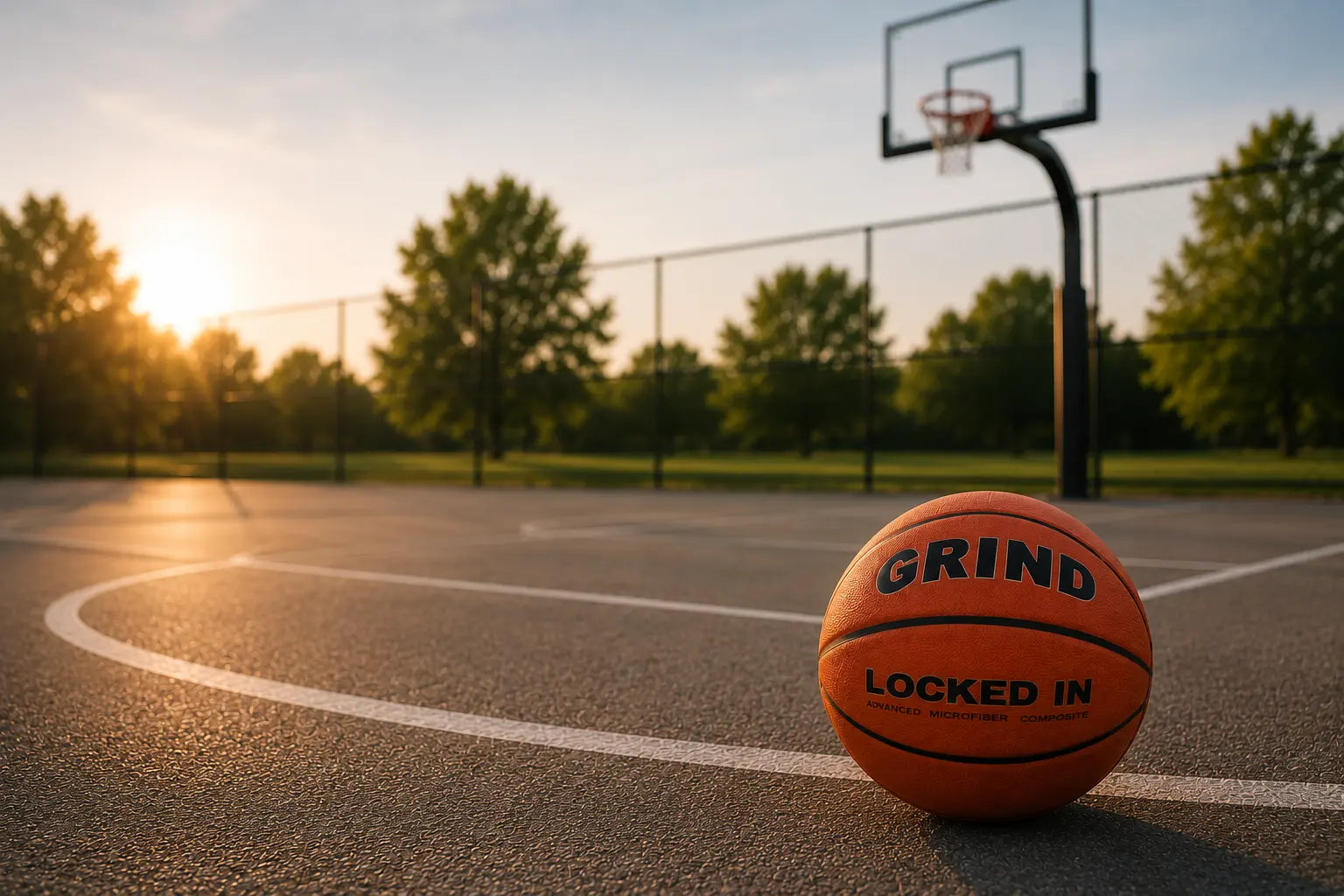
A basketball returner can be a $20.99 Spalding chute that hooks onto your rim or a $1,995 pneumatic shooting machine that passes to 9 spots at 1,000 reps per hour. Both get called a basketball returner in search results. They solve different problems for different players, and buying the wrong one is a common and expensive mistake.
Want a Basketball Returner Built for Serious Solo Reps? See the GRIND Machine →
What Is a Basketball Returner?
A basketball returner is any training tool that sends, rolls, redirects, or passes the ball back after a shot so the player spends less time chasing and more time shooting. The design determines how well it does that job.
|
Type |
How it works |
Best for |
Main limitation |
|
Rim or chute returner |
Attaches near the rim, sends made shots back |
Beginners, free throws |
Usually weak for misses |
|
Return net |
Catches or redirects balls around the hoop |
Driveway practice, casual solo shooting |
Return angle and miss coverage vary |
|
Yard guard net system |
Blocks or collects balls around the hoop area |
Outdoor home courts |
More containment than true passing |
|
Manual shot trainer |
Nets the ball and rolls it back |
More structured solo reps |
Still lacks automated passing rhythm |
|
Automatic shooting machine |
Catches and passes the ball back |
Serious solo training |
Higher upfront cost |
The word returner gets applied to all of them. A parent buying for a beginner and a high school player training five days a week both search the same keyword. They need different tools.
How Does a Basketball Returner Work?
Simple Returners Roll or Redirect the Ball
Chutes and return attachments work best when the shot goes in clean. The ball drops through the net, hits the chute, and rolls back toward where you are standing. Nets catch more than chutes because they cover a wider area, but the return angle depends on where the ball hits the net.
A clean make from straight on returns predictably. A hard kick-out off the side of the backboard goes somewhere else entirely.
The FORZA Basketball Solo Return Net is a useful example of what this category does at its best. The net is 3 metres long, 1.5 metres wide at the top and 2.7 metres at the bottom. It uses UV-treated polyester with reinforced binding, comes with heavy-duty sandbags for stability, and weighs 2.4 kg. It fits most freestanding and wall-mounted hoops.
At $54 (£39.99) it does the job of reducing ball chasing during casual solo practice outdoors. It does not pass the ball, though. It redirects it.
Automatic Returners Catch and Pass the Ball Back
An automatic returner uses a net, collection system, and return mechanism to send the ball back without the player having to reset. On the GRIND Machine, the 12-foot net catches the ball whether it goes in or not. From there it funnels toward the arm, hits the rail to kill the momentum, and the pneumatic system passes it back to a programmed spot.
The player does not move between shots. The ball arrives at the high school three-point line, approximately 19 feet out, ready to catch and shoot.
Why the Difference Matters
A ball that rolls back slowly is useful. A ball that comes back to the same spot consistently enough to build real catch-and-shoot rhythm is a different training tool. The gap between rolling and passing is where most buyers underestimate what they need.
How Much Should You Spend on a Basketball Returner?
|
Budget |
What to expect |
Best fit |
|
Under $100 |
Basic chute, plastic rim attachment, simple return aid |
Young beginners, free throws |
|
$100–$300 |
Return net, yard guard, outdoor ball containment |
Casual driveway shooting |
|
$300–$500 |
Manual shot trainer, better return structure |
Intermediate solo players |
|
$1,995–$2,495 |
GRIND automatic shooting machine |
Serious home players |
|
$2,500 and up |
Facility-level shooting machine |
Teams, schools, training centres |
The Goalrilla Basketball Hoop Return System at $109.95 and the Silverback Yard Guard at $219.95 cover the mid-range driveway category well. The Dr. Dish IC3 at $499.99 is the best manual option for players who want both makes and misses returned without going to a full machine.
The GRIND Machine at $1,995 is the only option in this comparison that passes the ball back rather than rolling it, with payment plans available through Affirm from $97 per month at 0% APR.
When a Cheaper Returner Is Enough
The player is new, the goal is casual driveway shooting or free throw repetition, budget is the main constraint, and they do not practice often enough to justify more. A $20.99 Spalding Back Atcha with 207 reviews at 4.0 stars on Walmart returns made shots from near the basket. That’s the job, and it does it well.
When Spending More Makes Sense
The player trains several times per week and needs hundreds of shots per session. They want to shoot from multiple spots around the arc. They are preparing for tryouts, a school season, or AAU. Nobody is consistently available to rebound for them. They need a repeatable routine that runs without waiting on anyone else.
What Should I Look for in a Basketball Returner Before Buying?
Made-Shot and Missed-Shot Coverage
This is the most important question and the one most buyers skip. A returner that only helps after clean makes does not solve the real training problem. A developing player misses more than they make. If the product does not handle misses, the player is still chasing the ball on every rep that matters most.
The GRIND FAQ is specific about this: the machine catches both makes and misses using the 12-foot net. The Dr. Dish IC3 handles both using a manual 180-degree ramp. Basic chute attachments like the SKLZ Kick-Out at $59.99 handle made shots primarily. Know which category you are buying before the money is spent.
Return Consistency
The best basketball returner is not just one that sends the ball back. It is one that sends it back predictably enough for the player to stay in rhythm. A chute returns to one fixed angle. A net returns based on where the ball hits it. An automatic machine delivers to a programmed spot every time. That consistency is what makes the difference between open shooting and structured training.
Training Rhythm and Passing Spots
The GRIND Machine passes to 9 spots on the court: the top of the key, three spots between the top of the key and the deep corners, and both deep corners. There is a manual lever on the base to change spots. No automatic rotation, but 9 positions is significantly more flexibility than the single return angle most nets and chutes provide.
For a full breakdown of how shooting machines structure that kind of drill work, the best basketball drills for practice guide covers how to build sessions around it.
Hoop Compatibility
The GRIND Machine requires a rim at exactly 10 feet and a backboard at least 44 inches wide, which covers all standard backboard widths at high school level and above. It works with portable, in-ground, and wall-mounted hoops as long as those specs are met. Basic return attachments vary.
The Goalrilla system is marketed specifically as compatible with most in-ground hoops, which implies it may not work reliably on all portable setups. The FORZA return net fits most freestanding and wall-mounted hoops.
Check your specific hoop type, rim height, backboard width, and whether a pole attachment will clear your height-adjustment mechanism before buying anything that attaches directly to the hoop.
Indoor vs Outdoor Durability
Outdoor use adds UV exposure, wind, rain, and repeated impact. The FORZA net uses UV-treated polyester with reinforced 600D and 420D bindings and includes sandbags for stability. The GRIND Machine has electrical components and should not be left in rain, sleet, or snow.
If you need a permanent outdoor setup, a UV-treated net system is the more durable choice for that specific environment. If you bring the machine in after each session, the GRIND works outdoors without issue.
Portability and Storage
The GRIND Machine weighs 110 lbs, folds flat with two wheels for movement, and stores at 38" x 13" x 18". The FAQ notes it may need a second person when loading into a vehicle. The FORZA net weighs 2.4 kg and comes with a carry bag. The IC3 weighs 35 lbs.
For home buyers, storage footprint determines whether the product comes out daily or sits unused after the first week. A machine that takes 20 minutes to set up does not get used before school.
Setup Time
The GRIND Machine sets up and tears down in 90 seconds. That is a deliberate design priority, not a marketing claim. A returner that requires assembly every session creates friction that reduces how often it gets used. For any home training equipment, setup time is as important as the training features.
Power Requirements
The GRIND Machine runs on a standard US electrical outlet only. It’s not battery-powered. For outdoor use without an outlet, a compatible portable power supply works. Basic chutes and net systems require no power.
This is a real consideration for players who primarily train at an outdoor court away from a power source. The GRIND FAQ includes a specific power supply recommendation on Amazon for players who need it.
Number of Basketballs Supported
The GRIND Machine works with two balls to reach 1,000 reps per hour. The FAQ specifically states to shoot the first ball, then wait until it reaches the funnel before shooting the second.
Loading two balls simultaneously jams the machine. Done correctly, two-ball use is what makes the 1,000-rep-per-hour figure achievable. Basic return systems typically work with whatever ball you are shooting with.
Warranty and Replacement Support
The GRIND warranty is one of the strongest in this category. It covers normal wear and tear along with full part replacements including netting, and shipping costs on all replacement parts.
Extended coverage options run to 8 years. For basic return attachments in the $20 to $100 range, replacement parts are rarely available and net wear is the most common failure point after outdoor use.
Upgrade From Ball Return to Real Solo Training With GRIND →
Is an Automatic Basketball Returner Worth the Price?
An automatic basketball returner is worth it for a player who trains four or five times a week and is preparing for a real competitive environment.
The practical case is rep volume. Getting 500 shots up in an hour instead of six hours means running that workout every day rather than once a week. That is the difference between 500 reps and 3,500 reps from the same time investment in a week.
Brandon Payne has run Steph Curry through machine-assisted workouts since 2011 because consistent pass placement and high rep volume at game speed is what builds the mechanics that hold up under pressure.
Automatic Returners Are Worth It For...
-
Competitive youth players training for a school season or tryout.
-
High school players who need structured daily volume.
-
Families where parents do not want to rebound every workout.
-
Players who need a repeatable routine can run independently at any time.
Automatic Returners May Not Be Worth It For...
-
Very young beginners working on basic form.
-
Casual players who shoot occasionally.
-
Buyers with a strict under-$300 budget.
-
Players who only need ball containment during casual driveway practice.
Why GRIND Is the Automatic Option for Home Players
The GRIND Machine is the only automatic basketball returner in this comparison built specifically for home use. It bridges the gap between a basic return net and a facility machine that costs $6,000 and weighs 400 lbs.
At 110 lbs, 90-second setup, 9 spot passing, and 1,000 reps per hour, it gives home players the training infrastructure that used to require a school gym.
Basketball Returner vs Rebounder vs Shooting Machine
|
Tool |
Best for |
Price level |
Training quality |
GRIND angle |
|
Basketball returner |
Broad term for ball-return tools |
Low to premium |
Depends on type |
GRIND is an automatic returner and shooting machine |
|
Return net |
Casual home practice |
Low to mid |
Helpful but limited |
Good starter, not serious rhythm |
|
Rebounder |
Return or rebounding drills |
Low to mid |
Depends on design |
May not return ball for shooting |
|
Manual trainer |
More structured solo reps |
Mid |
Better than basic net |
Still lacks full automatic passing |
|
Shooting machine |
High-volume solo training |
Premium |
Strongest |
GRIND's core category |
For a full comparison of how the GRIND Machine stacks up against Dr. Dish and The Gun across different use cases, the basketball shooting machine comparison guide covers that in detail. And if you want to understand exactly how the technology behind any of these machines works before committing, the what is a basketball shooting machine guide breaks down the mechanics, pass systems, and net designs.
Best Basketball Returner by Buyer Type
Best for Beginners: Basic Chute Returner
The Spalding Back Atcha at $20.99 is the best-selling product in the basketball return category on Walmart with 207 reviews at 4.0 stars.
It handles made shots and gets the ball back to a young player without complication. That is the job at this level.
Best for Casual Driveway Players: Return Net
The Goalrilla at $109.95 or the Silverback Yard Guard at $219.95 cover more of the court than a chute and work better outdoors on a home hoop.
Wind stability and setup storage matter more for this buyer than rep volume.
Best for Rebounding Drills: Rim or Dome Rebounder
For players specifically working on tracking caroms, positioning, and box-outs, a rim rebounder deflects the ball outward to create unpredictable bounce-outs. This is a different training goal from shooting volume.
Best for Intermediate Solo Players: Manual Shot Trainer
The Dr. Dish IC3 at $499.99 is the best manual option. It handles both makes and misses with a 180-degree return ramp, weighs 35 lbs, and works on pole and wall-mount hoops.
The limitation is that it rolls the ball back rather than passing it, which affects shooting rhythm at higher rep levels.
Best for Serious Home Training: GRIND Machine
Automatic return, 9 spot passing, 1,000 reps per hour, 90-second setup, 110 lbs, folds to 38" x 13" x 18", works with two balls, built for home courts, driveways, garages, and small gyms.
Recommended for athletes 8 and up, with adult supervision for players between 8 and 13. Works with size 6 and size 7 basketballs. Requires a 10-foot rim and at least a 44-inch backboard.
Ready to Stop Buying Good Enough Returners and Start Getting Serious Reps? Explore the GRIND Machine →
FAQ
What is a basketball returner?
A basketball returner is a training tool that sends, redirects, rolls, or passes the ball back after a shot. It ranges from a simple rim attachment under $30 to a full automatic shooting machine at $1,995.
How does a basketball returner work?
Simple returners use a chute or net to redirect the ball using gravity and angle. Automatic returners use a net, collection system, and pneumatic or mechanical pass system to catch the ball and deliver it back to a programmed spot.
What should I look for in a basketball returner before buying?
Made-shot and missed-shot coverage, return consistency, hoop compatibility, setup time, storage footprint, durability for indoor or outdoor use, whether the product supports real shooting rhythm, warranty coverage, and power requirements if buying an automatic machine.
How much should I spend on a basketball returner?
Under $100 for basic beginner use. $100 to $300 for casual driveway practice. $300 to $500 for a manual shot trainer. $1,995 to $2,495 for the GRIND automatic shooting machine. Above $2,500 for facility-level machines.
Is an automatic basketball returner worth the price?
Yes, for players who train several times per week and need high-volume consistent reps. Not necessary for beginners or casual shooters who only need ball containment.
Is GRIND a basketball returner?
GRIND is an automatic basketball returner and portable shooting machine. It catches made and missed shots, passes the ball back to 9 spots, and supports up to 1,000 reps per hour.
What features matter most in a basketball returner?
Return consistency and missed-shot coverage are the two that most buyers underestimate. Setup time determines how often the product gets used. Hoop compatibility determines whether it works with your specific setup at all.
Can a basketball returner help improve shooting?
It helps players take more shots with less downtime, which builds muscle memory over time. Better shooting still depends on form, footwork, balance, and structured practice. For how to build that structure into a home shooting session, the basketball shooting drills guide covers the specifics.
Share:
Basketball Return Net vs Rebounder vs Shooting Machine: Which Solo-Training Tool Fits Your Budget
Basketball Rebound Machine vs Manual Rebound Net: Which Is Worth the Investment